
TABLE OF CONTENTS
20 February 2026
Share this post
You're spending RM500 on Facebook ads.
Your creative is stunning. Your targeting is laser-focused. You're getting leads... but they're not buying.
What's going wrong?
It's not your ad. It's not your product. It's your response time.
Here's the data-backed truth about lead response time, and what you can do about it.

The Expensive Mistake Most Advertisers Make
You've done everything right. Your Facebook ad campaign has a compelling hook, a scroll-stopping creative, and a highly targeted audience.
Leads start flowing in, and then... nothing. Hours pass. Maybe a day. Your sales rep finally calls the lead back and gets voicemail. Sound familiar?
This scenario plays out thousands of times every day, and it's the single biggest reason Facebook ad campaigns fail to deliver a positive return on investment.
The problem isn't your targeting, your copy, or your creative. The problem is your response time.
If you take only one thing away from this article, let it be this statistic:
"The odds of qualifying a lead drop by 400% if you wait just 10 minutes to respond compared to 5 minutes."
In the world of digital sales, this is known as the Golden Window.
What Is the "Golden Window" of Lead Response?
The "Golden Window" refers to the critical timeframe immediately after a prospect submits their information through your Facebook ad, typically a Lead Ad form, a Messenger inquiry, or a landing page conversion.
During this window, the lead is at peak intent, peak attention, and peak emotional readiness to engage.
Research from Harvard Business Review, InsideSales.com, and Drift collectively point to the same conclusion: the optimal response window is between 1 and 5 minutes. After that, conversion likelihood drops sharply with every passing minute.
In Malaysia, where mobile penetration is incredibly high and attention spans are incredibly short, that 5-minute window is often even smaller.
The Lead Response Time Data You Need to Know
Less than 1 minute: Highest connect rate. Lead is still on their phone, actively thinking about your offer.
1–5 minutes: Still within the Golden Window. Conversion rates remain strong.
5–30 minutes: Conversion rate drops by up to 80%. The lead has moved on mentally.
30 minutes – 24 hours: You are now 21x less likely to qualify the lead compared to a 5-minute response.
24+ hours: Most leads have already contacted a competitor. Your ad spend is wasted.
A study by MIT and InsideSales found that the odds of contacting a lead decrease by over 10x within the first hour of inquiry. After 24 hours, contact rates drop to near zero.
Why Facebook Leads Are Uniquely Time-Sensitive
Facebook leads behave differently from search engine leads, and understanding this distinction is crucial for your response strategy.
When someone searches on Google for "best CRM software" or "emergency plumber near me," they are in active, high-intent discovery mode. They are looking for you.
Facebook is different. Your ad interrupts someone who was scrolling through videos of their cousin's baby shower. They saw your offer, felt a momentary spark of interest, and filled out a form, often impulsively.
That spark fades fast.
The Psychology of the Malaysian Shopping Culture
To fix your conversion rate, you must understand the specific psychology of the Malaysian consumer. We are unique in how we shop.
1. The "Trust Deficit"
Malaysians are skeptical shoppers. We have all heard stories of scams or products that never arrived. In the digital space, silence is suspicious.
If a customer messages a business and doesn't get a reply instantly, their brain subconsciously categorises the business as:
- Inactive (Store is closed/abandoned).
- Unprofessional (If they can't reply to a sale, how will they handle a refund?).
- Untrustworthy.
A fast reply acts as immediate social proof. It says: "We are here. We are real. We are ready to serve you."
2. The "Mamak" Scrolling Habit
Think about when your customers are most active. It's rarely 10:00 AM on a Tuesday.
Data shows that e-commerce browsing in Malaysia spikes during lunch breaks (1:00 PM), commute times (6:00 PM), and late at night (9:00 PM - 12:00 AM).
This is the "Mamak" or "Bedtime" scroll. Your customers are relaxed, browsing casually, and prone to impulse buying.
However, most SME owners are running their businesses on "office hours." You run ads 24/7, but you only reply from 9 AM to 6 PM.
This is a massive disconnect.
You are paying Facebook to show ads to people at 11:00 PM. They engage. You are asleep. By the time you wake up and reply at 9:00 AM, that customer is in a rush for work, stressed, and no longer interested in your product.
3. Malaysia's Mobile-First Market
Malaysian consumers are among the most mobile-connected in Southeast Asia. 80% of Facebook users in Malaysia access the platform via mobile, and they expect instant gratification.
Consider these Malaysian shopping behaviors:
The Late-Night Browser:
- Scrolls Facebook at 10 PM - 1 AM (peak impulse inquiry time)
- Makes emotional decisions about purchases/bookings
- Loses interest by morning if not engaged immediately
The Lunch Break Shopper:
- 15-minute window during work break
- Compares 3-4 furniture showrooms simultaneously
- Goes with whoever replies first with showroom details
The Weekend Planner:
- Ready to schedule appointments on Saturday/Sunday
- Browses service providers while clinic is closed
- Books with the first clinic that responds
If you're not there in their "golden window," you simply don't exist.

Why Most Businesses Are Failing the Golden Window (And Don't Know It)
Most business owners and marketing managers believe their team is responding to leads quickly. The data disagrees. Here are the most common failure points:
1. Leads Are Delivered to the Wrong Place
Facebook Lead Ads store leads inside Facebook's Lead Center by default. If your team isn't checking that dashboard multiple times per day — or if leads aren't being pushed to your CRM automatically — hours can pass before anyone even sees the inquiry.
2. There Is No Defined Response Protocol
Without a clear SOP (Standard Operating Procedure) for lead follow-up, leads get lost in inboxes, assigned to the wrong rep, or simply forgotten during busy periods. Speed requires systems, not good intentions.
3. Manual Processes Create Bottlenecks
If a human being needs to manually see the lead, assign it, and then make the call, you have already lost 10–30 minutes under ideal conditions. In real-world conditions, it's often much longer.
4. After-Hours Leads Are Ignored Until Morning
A significant portion of Facebook users browse in the evening. If your business only operates 9–5, a lead submitted at 8 PM waits until 9 AM — a 13-hour gap that virtually guarantees the lead goes cold.
5. No Immediate Automated Acknowledgment
Even if a human can't call immediately, failing to send an automated acknowledgment email or SMS is a critical miss. Silence after submitting a form creates doubt: Did it go through? Are these people even real?

The Solution: Automating the "First Touch"
The goal isn't to remove humans from your business. People still buy from people. The goal is to use technology to handle the robotic part of the sales process so the humans can handle the relational part.
This is where Dah Reply fits into the ecosystem of a modern Malaysian SME.
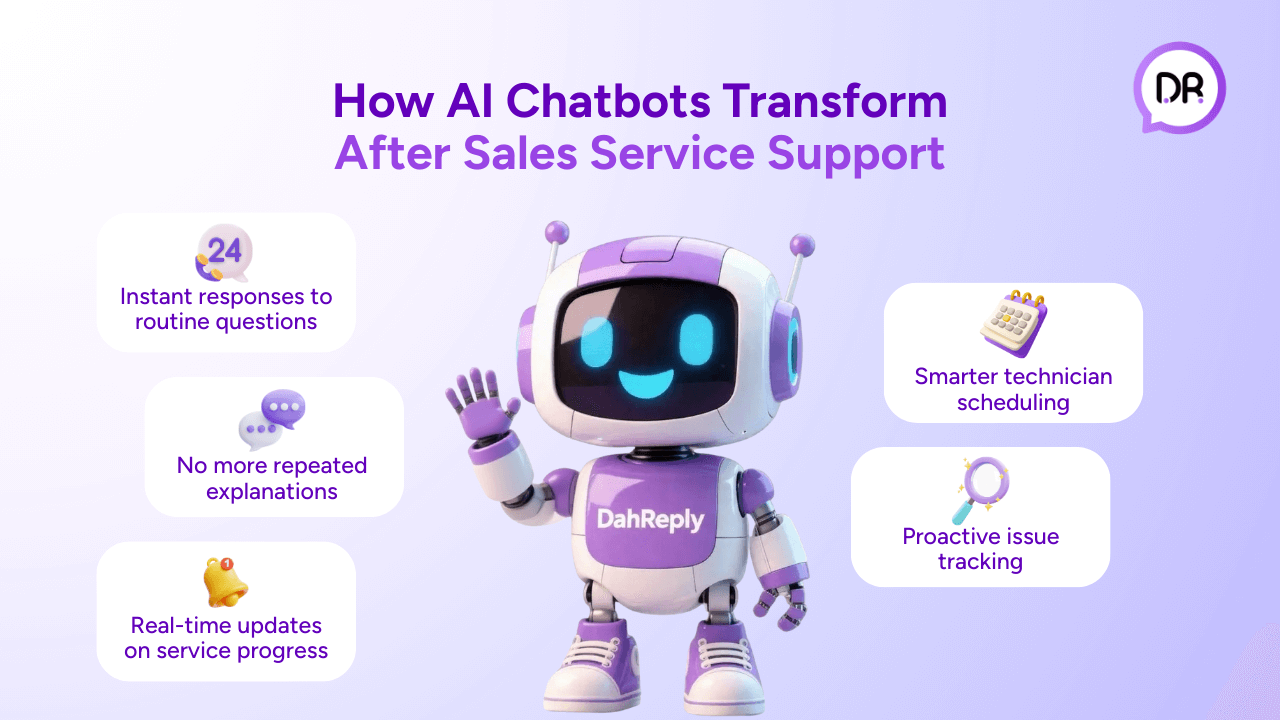
Dah Reply doesn't just "auto-reply" with a generic message. It acts as a 24/7 sales agent that:
- Acknowledges: "Hi! Thanks for asking about the [Product Name]."
- Answers FAQs: Instantly provides pricing, sizing, or location info.
- Directs: Sends the serious buyers straight to the payment link.
- Filters: Weeds out the "tire kickers" so your human team only talks to qualified leads.
By automating that initial interaction — the "Golden Window" — you ensure that every single ringgit you spend on Facebook Ads is given the best possible chance to convert.
You catch the lead while the dopamine is high. You build trust through instant engagement. And most importantly, you stop leaking money.
Stop Blaming Your Ads, Start Fixing Your Follow-Up
Facebook advertising is one of the most powerful lead generation channels available to businesses of any size. But the ad itself is only half of the equation. The other half — the half that most businesses neglect — is what happens after the click.
If your team is not responding to leads within the Golden Window of 1 to 5 minutes, you are not just losing leads. You are actively wasting every dollar you invest in reaching them in the first place.
The fix is not complicated. It requires systems, automation, and accountability. Integrate your lead delivery, automate your first touch, train your team on speed, and measure your results. Do this, and your Facebook ads will start performing the way they were always capable of.
Final Takeaway: Your Facebook ad budget buys you attention. Your response time determines whether that attention turns into revenue.
Want to capture your Golden Window? Try Dah Reply today and boost your conversions automatically!
Frequently Asked Questions About Facebook Ad Lead Response Time
What is a good lead response time for Facebook ads?
The ideal lead response time for Facebook ads is under 5 minutes. Within this window — the Golden Window — you are significantly more likely to connect with the lead, build rapport, and move them toward a purchase. Anything beyond 30 minutes dramatically reduces your chances of conversion.
Why do Facebook leads go cold so fast?
Facebook leads are typically generated through interruption-based advertising. Unlike search leads who are actively looking for a solution, Facebook leads were browsing passively when your ad caught their attention. Their interest is real but momentary, and without immediate follow-up, that interest fades quickly as they return to their regular feed and daily activities.
How can I automatically follow up with Facebook leads faster?
The most effective approach is to integrate Facebook Lead Ads with your CRM using an automation tool like Zapier, LeadsBridge, or a native connector. This triggers an instant SMS and email to the lead, and sends an immediate notification to your sales rep. Some businesses also use AI chatbots to engage leads in real time, 24 hours a day.
Does response time really affect Facebook ad ROI?
Yes, dramatically. Multiple studies confirm that responding within 5 minutes can increase lead conversion rates by 8x or more compared to responding within the hour. For high-ticket products or services, improving response time is often the single highest-ROI change a business can make to its marketing funnel — more impactful than new creative or refined targeting.
What should I say when I respond to a Facebook lead quickly?
Your first contact should be warm, low-pressure, and immediately relevant. Reference the specific ad or offer they responded to, confirm you received their inquiry, and ask an open-ended question to start a conversation. Avoid jumping straight into a hard sales pitch — the goal of the first touch is to build trust and confirm their interest, not close the deal.