After Sales Service Support: How to Deliver Excellent Customer Experience

Insights

TABLE OF CONTENTS

    After sales service support is one of the most important moments in a customer’s journey. Customers rarely judge a brand only by the appliance they buy. They remember how the brand responds when something goes wrong.

    This is where after sale customer service either builds long-term trust or quietly pushes customers away. A delayed response, a missed update, or having to repeat the same issue multiple times can undo years of brand loyalty.

    Brands that consistently deliver customer service excellence understand that after sales support is not a cost centre. It is a competitive advantage.

    In this guide, we explore the most common pain points in home appliance after sales service support and show how brands can provide after sales service to customers efficiently, improve satisfaction, and build loyalty.

    After Sales Service Support: How to Deliver Excellent Customer Experience

    Why After Sales Service Support Matters

    Customers rarely contact appliance brands when everything is working perfectly. Most enquiries happen when something goes wrong, which makes after sale customer service crucial for:

    • Building customer trust and confidence
    • Protecting brand reputation
    • Driving repeat purchases and loyalty

    Great service at these moments builds trust. Poor service creates frustration that customers remember far longer than the original problem.

    Brands that focus on improving service quality across the entire support journey tend to see higher loyalty, better reviews, and stronger repeat purchases.

    Common Pain Points in Home Appliance After Sales Service

    1. Overloaded Support Channels and Long Waiting Times

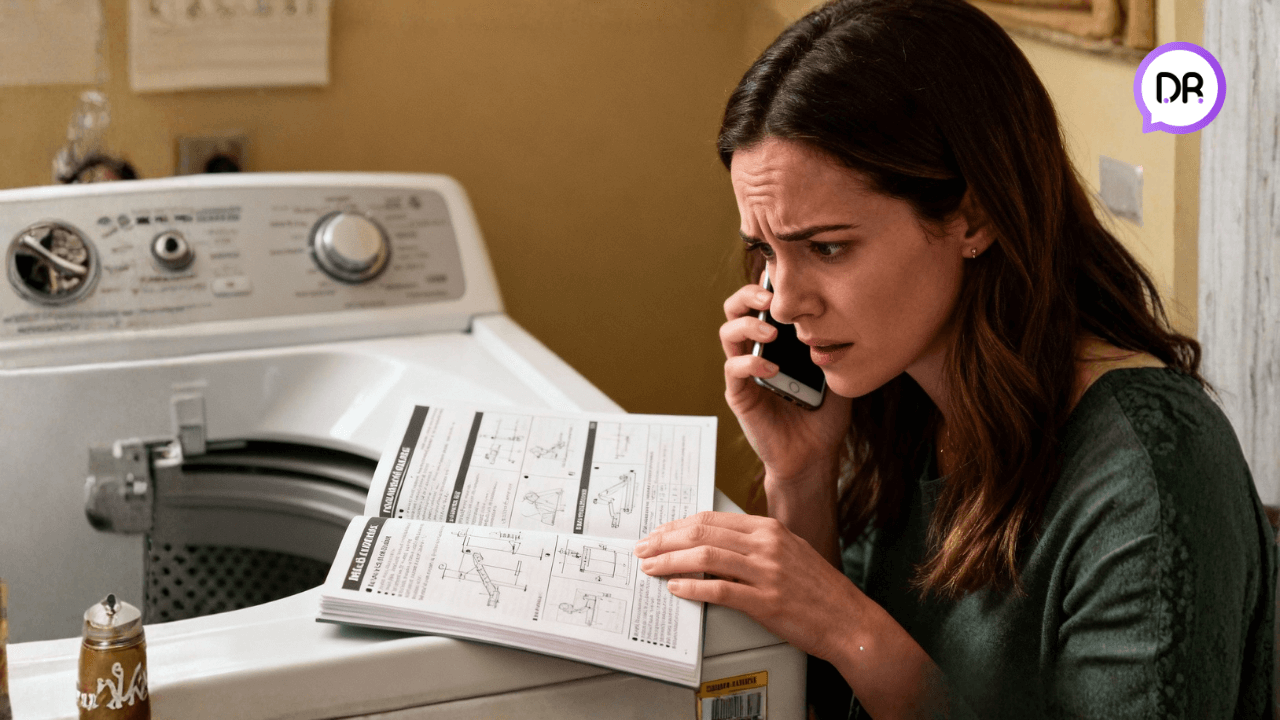
    Imagine your washing machine stops mid-cycle on a busy Monday morning. You call the customer service hotline, only to be placed on hold for what feels like forever. Emails go unanswered, and chat requests sit in queues.

    This is a reality for many customers. Home appliance brands often struggle to handle high volumes of enquiries, especially during peak seasons or when multiple customers report the same issue.

    The consequences go beyond inconvenience. Customers feel undervalued, trust starts to slip, and even simple enquiries turn stressful. Support teams, meanwhile, are stretched to their limits, leading to mistakes and inconsistent service.

    How to improve:

    • Centralise enquiries from calls, emails, and online forms to keep everything in one place
    • Prioritise urgent requests so high-impact issues get faster attention
    • Implement clear response workflows to manage high volumes efficiently

    2. Customers Repeating the Same Issue Multiple Times

    Few things annoy customers more than having to repeat themselves. Picture this: you called last week to report your fridge not cooling properly. Today, a different agent asks the same questions again.

    For customers, it signals that their time and concerns are not valued. For brands, it creates inefficiencies and slows down resolution. Even the most well-intentioned support teams struggle to impress when they cannot access prior conversation history.

    How to improve:

    • Collect detailed information at the first point of contact
    • Ensure all support staff and technicians have access to previous interactions
    • Standardise processes for logging and sharing customer issues

    3. Poor Service Request Tracking and Lack of Updates

    Even when service requests are logged correctly, customers can feel lost in the process. Some brands still track requests using disconnected spreadsheets, emails, or multiple platforms. The result? Customers are unsure if their issue is being addressed or when help will arrive.

    This uncertainty makes customers anxious and less confident in the brand. Excellent after sales service becomes difficult to maintain without clear tracking and communication.

    How to improve:

    • Use a centralised system to track every service request
    • Keep customers informed with regular updates
    • Set clear timelines and responsibilities for each step of the service process

    4. Missed or Inefficient Technician Dispatch

    Scheduling a technician sounds simple, but mistakes happen frequently. Technicians sometimes arrive without the right tools or parts, or need multiple visits to fix a single issue.

    Even skilled technicians cannot overcome gaps in scheduling and preparation. Customers feel their time is wasted, and frustration grows.

    How to improve:

    • Provide technicians with complete information before their visit
    • Ensure all necessary tools and parts are ready in advance
    • Schedule visits efficiently and communicate clearly with customers

    5. Low Customer Satisfaction After Service Completion

    Many brands consider a service request complete once the technician leaves. But customers may still have concerns or questions. Without follow-up, minor issues can escalate, leaving customers feeling unsupported.

    How to improve:

    • Send follow-up messages to confirm the issue is resolved
    • Offer simple satisfaction surveys or check-ins
    • Make customers feel their experience is valued beyond the repair

    6. Overworked Teams and Agent Burnout

    After-sales teams often spend hours on repetitive tasks such as confirming appointments, explaining warranty coverage, or handling simple troubleshooting questions. While these tasks are important, they take time away from more complex cases, leading to fatigue and mistakes.

    How to improve:

    • Streamline repetitive tasks with automated workflows
    • Provide clear guidelines and resources for agents
    • Allow teams to focus on complex or high-value cases

    7. Lack of Visibility Into Recurring Product Issues

    Without proper tracking, recurring appliance issues remain hidden until they affect multiple customers. Brands miss the chance to fix underlying problems or prevent future complaints.

    How to improve:

    • Track recurring issues centrally to spot patterns quickly
    • Analyse trends to proactively prevent repeated problems
    • Use reporting tools to improve decision-making and operational efficiency
    After Sales Service Support: How to Deliver Excellent Customer Experience

    How AI Chatbots Enhance After Sales Service Support

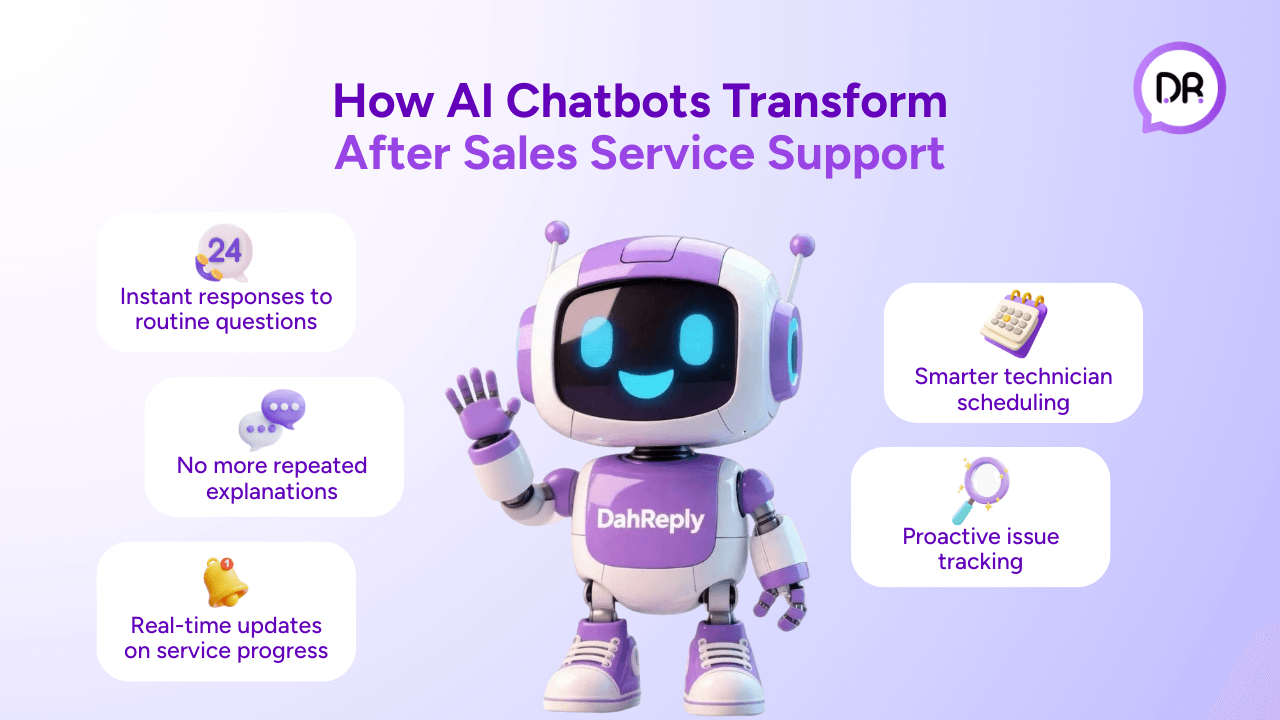
    AI chatbots are powerful tools for improving after sales service support. They do not replace humans but make service teams more efficient by:

    Here’s how they make a real difference:

    • Instant responses to routine questions: Customers get answers immediately, reducing frustration and waiting times.
    • No more repeated explanations: Chatbots gather all essential information upfront, so customers never have to repeat themselves.
    • Real-time updates on service progress: Automated notifications keep customers informed at every step, building trust and confidence.
    • Smarter technician scheduling: Chatbots help streamline appointments, ensuring technicians arrive prepared and on time.
    • Proactive issue tracking: Recurring problems are flagged early, allowing teams to resolve issues before they escalate.

    The result is a seamless after sales experience that impresses customers, boosts satisfaction, and strengthens loyalty. Meanwhile, human teams can focus on complex cases that require their expertise, turning support into a strategic advantage. It is about supporting, not replacing, human agents.

    When implemented thoughtfully, chatbots can also keep conversations natural and human, which builds customer trust.

    Integrating AI chatbots is no longer just an option. It is a way to deliver excellent after sales service consistently and create customers who truly feel valued.
    After Sales Service Support: How to Deliver Excellent Customer Experience

    Final Thoughts

    After sales service support is more than repairing appliances. It is about providing a seamless, reliable, and attentive experience that makes customers feel valued.

    By addressing common pain points, implementing intelligent systems, and integrating AI chatbots, appliance brands can provide great after sales service that delights customers, builds loyalty, and strengthens brand reputation.

    The brands that get after sales service right do more than fix problems, they create customers for life.

    If you want to transform your after sales service from a source of stress into a competitive advantage, reach out to our team today.

    We can help you streamline enquiries, keep customers informed, and empower your support teams to focus on what truly matters. Don’t let another missed update or repeated enquiry affect your brand’s reputation! Contact us now.


    FAQs About After Sales Service Support

    Q1: Why is after sales service support important for appliance brands? A1: It builds trust, protects brand reputation, and encourages repeat purchases. Customers remember how well they were supported after a purchase.

    Q2: How can brands reduce long waiting times in after sales service? A2: Centralising enquiries, automating responses, and using AI chatbots can reduce delays and improve customer satisfaction.

    Q3: What is the role of AI chatbots in after sale customer service? A3: Chatbots handle routine enquiries, update customers automatically, collect struct

    Q4: How can brands prevent customers from repeating the same issues? A4: By capturing all relevant details at first contact and sharing information across agents and technicians. AI chatbots can automate this process.

    After sales service support is one of the most important moments in a customer’s journey. Customers rarely judge a brand only by the appliance they buy. They remember how the brand responds when something goes wrong.

    This is where after sale customer service either builds long-term trust or quietly pushes customers away. A delayed response, a missed update, or having to repeat the same issue multiple times can undo years of brand loyalty.

    Brands that consistently deliver customer service excellence understand that after sales support is not a cost centre. It is a competitive advantage.

    In this guide, we explore the most common pain points in home appliance after sales service support and show how brands can provide after sales service to customers efficiently, improve satisfaction, and build loyalty.

    After Sales Service Support: How to Deliver Excellent Customer Experience

    Why After Sales Service Support Matters

    Customers rarely contact appliance brands when everything is working perfectly. Most enquiries happen when something goes wrong, which makes after sale customer service crucial for:

    • Building customer trust and confidence
    • Protecting brand reputation
    • Driving repeat purchases and loyalty

    Great service at these moments builds trust. Poor service creates frustration that customers remember far longer than the original problem.

    Brands that focus on improving service quality across the entire support journey tend to see higher loyalty, better reviews, and stronger repeat purchases.

    Common Pain Points in Home Appliance After Sales Service

    1. Overloaded Support Channels and Long Waiting Times

    Imagine your washing machine stops mid-cycle on a busy Monday morning. You call the customer service hotline, only to be placed on hold for what feels like forever. Emails go unanswered, and chat requests sit in queues.

    This is a reality for many customers. Home appliance brands often struggle to handle high volumes of enquiries, especially during peak seasons or when multiple customers report the same issue.

    The consequences go beyond inconvenience. Customers feel undervalued, trust starts to slip, and even simple enquiries turn stressful. Support teams, meanwhile, are stretched to their limits, leading to mistakes and inconsistent service.

    How to improve:

    • Centralise enquiries from calls, emails, and online forms to keep everything in one place
    • Prioritise urgent requests so high-impact issues get faster attention
    • Implement clear response workflows to manage high volumes efficiently

    2. Customers Repeating the Same Issue Multiple Times

    Few things annoy customers more than having to repeat themselves. Picture this: you called last week to report your fridge not cooling properly. Today, a different agent asks the same questions again.

    For customers, it signals that their time and concerns are not valued. For brands, it creates inefficiencies and slows down resolution. Even the most well-intentioned support teams struggle to impress when they cannot access prior conversation history.

    How to improve:

    • Collect detailed information at the first point of contact
    • Ensure all support staff and technicians have access to previous interactions
    • Standardise processes for logging and sharing customer issues

    3. Poor Service Request Tracking and Lack of Updates

    Even when service requests are logged correctly, customers can feel lost in the process. Some brands still track requests using disconnected spreadsheets, emails, or multiple platforms. The result? Customers are unsure if their issue is being addressed or when help will arrive.

    This uncertainty makes customers anxious and less confident in the brand. Excellent after sales service becomes difficult to maintain without clear tracking and communication.

    How to improve:

    • Use a centralised system to track every service request
    • Keep customers informed with regular updates
    • Set clear timelines and responsibilities for each step of the service process

    4. Missed or Inefficient Technician Dispatch

    Scheduling a technician sounds simple, but mistakes happen frequently. Technicians sometimes arrive without the right tools or parts, or need multiple visits to fix a single issue.

    Even skilled technicians cannot overcome gaps in scheduling and preparation. Customers feel their time is wasted, and frustration grows.

    How to improve:

    • Provide technicians with complete information before their visit
    • Ensure all necessary tools and parts are ready in advance
    • Schedule visits efficiently and communicate clearly with customers

    5. Low Customer Satisfaction After Service Completion

    Many brands consider a service request complete once the technician leaves. But customers may still have concerns or questions. Without follow-up, minor issues can escalate, leaving customers feeling unsupported.

    How to improve:

    • Send follow-up messages to confirm the issue is resolved
    • Offer simple satisfaction surveys or check-ins
    • Make customers feel their experience is valued beyond the repair

    6. Overworked Teams and Agent Burnout

    After-sales teams often spend hours on repetitive tasks such as confirming appointments, explaining warranty coverage, or handling simple troubleshooting questions. While these tasks are important, they take time away from more complex cases, leading to fatigue and mistakes.

    How to improve:

    • Streamline repetitive tasks with automated workflows
    • Provide clear guidelines and resources for agents
    • Allow teams to focus on complex or high-value cases

    7. Lack of Visibility Into Recurring Product Issues

    Without proper tracking, recurring appliance issues remain hidden until they affect multiple customers. Brands miss the chance to fix underlying problems or prevent future complaints.

    How to improve:

    • Track recurring issues centrally to spot patterns quickly
    • Analyse trends to proactively prevent repeated problems
    • Use reporting tools to improve decision-making and operational efficiency

    After Sales Service Support: How to Deliver Excellent Customer Experience

    How AI Chatbots Enhance After Sales Service Support

    AI chatbots are powerful tools for improving after sales service support. They do not replace humans but make service teams more efficient by:

    Here’s how they make a real difference:

    • Instant responses to routine questions: Customers get answers immediately, reducing frustration and waiting times.
    • No more repeated explanations: Chatbots gather all essential information upfront, so customers never have to repeat themselves.
    • Real-time updates on service progress: Automated notifications keep customers informed at every step, building trust and confidence.
    • Smarter technician scheduling: Chatbots help streamline appointments, ensuring technicians arrive prepared and on time.
    • Proactive issue tracking: Recurring problems are flagged early, allowing teams to resolve issues before they escalate.

    The result is a seamless after sales experience that impresses customers, boosts satisfaction, and strengthens loyalty. Meanwhile, human teams can focus on complex cases that require their expertise, turning support into a strategic advantage. It is about supporting, not replacing, human agents.

    When implemented thoughtfully, chatbots can also keep conversations natural and human, which builds customer trust.

    Integrating AI chatbots is no longer just an option. It is a way to deliver excellent after sales service consistently and create customers who truly feel valued.

    After Sales Service Support: How to Deliver Excellent Customer Experience

    Final Thoughts

    After sales service support is more than repairing appliances. It is about providing a seamless, reliable, and attentive experience that makes customers feel valued.

    By addressing common pain points, implementing intelligent systems, and integrating AI chatbots, appliance brands can provide great after sales service that delights customers, builds loyalty, and strengthens brand reputation.

    The brands that get after sales service right do more than fix problems, they create customers for life.

    If you want to transform your after sales service from a source of stress into a competitive advantage, reach out to our team today.

    We can help you streamline enquiries, keep customers informed, and empower your support teams to focus on what truly matters. Don’t let another missed update or repeated enquiry affect your brand’s reputation! Contact us now.


    FAQs About After Sales Service Support

    Q1: Why is after sales service support important for appliance brands? A1: It builds trust, protects brand reputation, and encourages repeat purchases. Customers remember how well they were supported after a purchase.

    Q2: How can brands reduce long waiting times in after sales service? A2: Centralising enquiries, automating responses, and using AI chatbots can reduce delays and improve customer satisfaction.

    Q3: What is the role of AI chatbots in after sale customer service? A3: Chatbots handle routine enquiries, update customers automatically, collect struct

    Q4: How can brands prevent customers from repeating the same issues? A4: By capturing all relevant details at first contact and sharing information across agents and technicians. AI chatbots can automate this process.

    TABLE OF CONTENTS

      Ready to Optimise Your Business with AI?

      Contact us today to learn more about how our AI solutions can help your business grow and succeed.

      Articles on Chatbots You Might Like...

      View More Articles